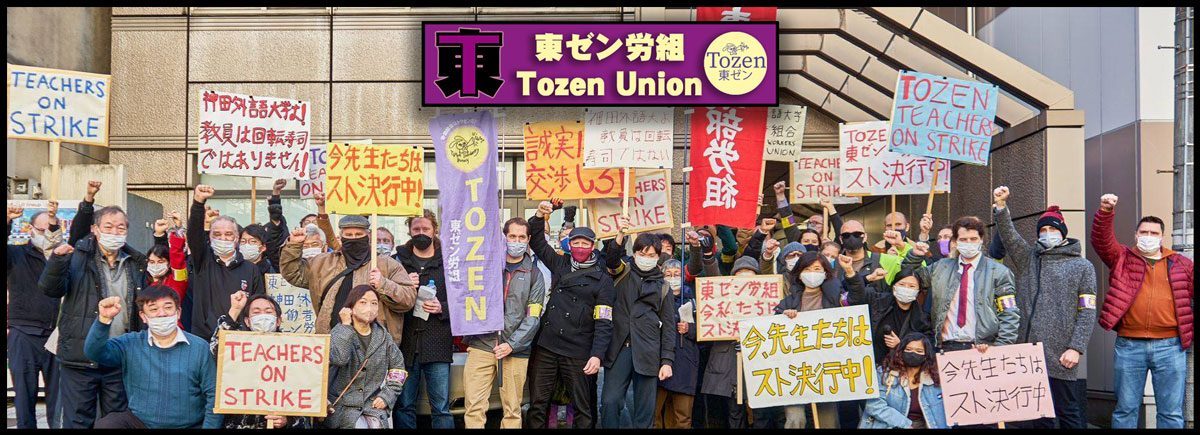
Tozen Union Joins Contingent Worker Alliance for Demo, Presser


Tokyo, Feb. 9, 2024 – Tozen Union

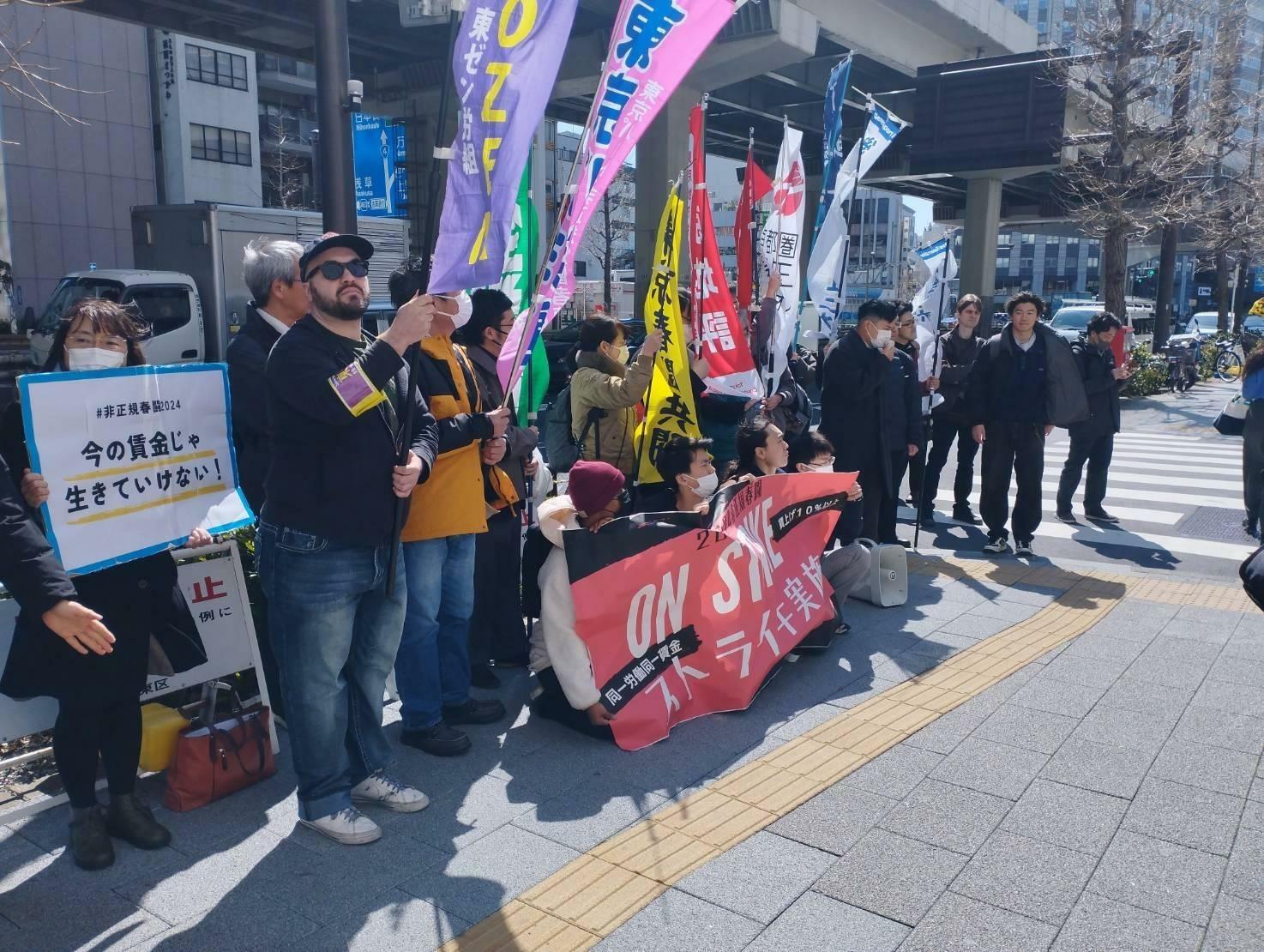
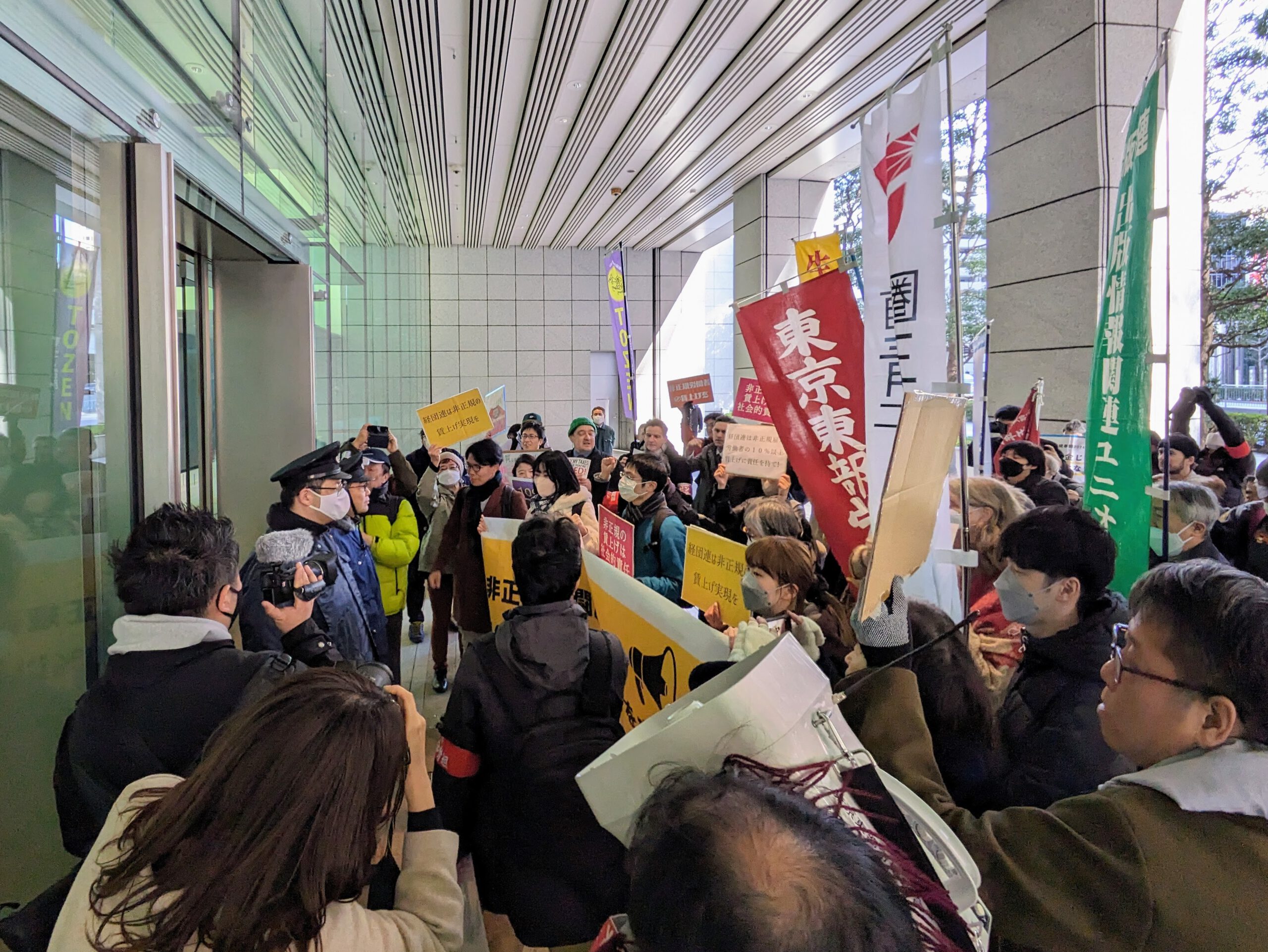
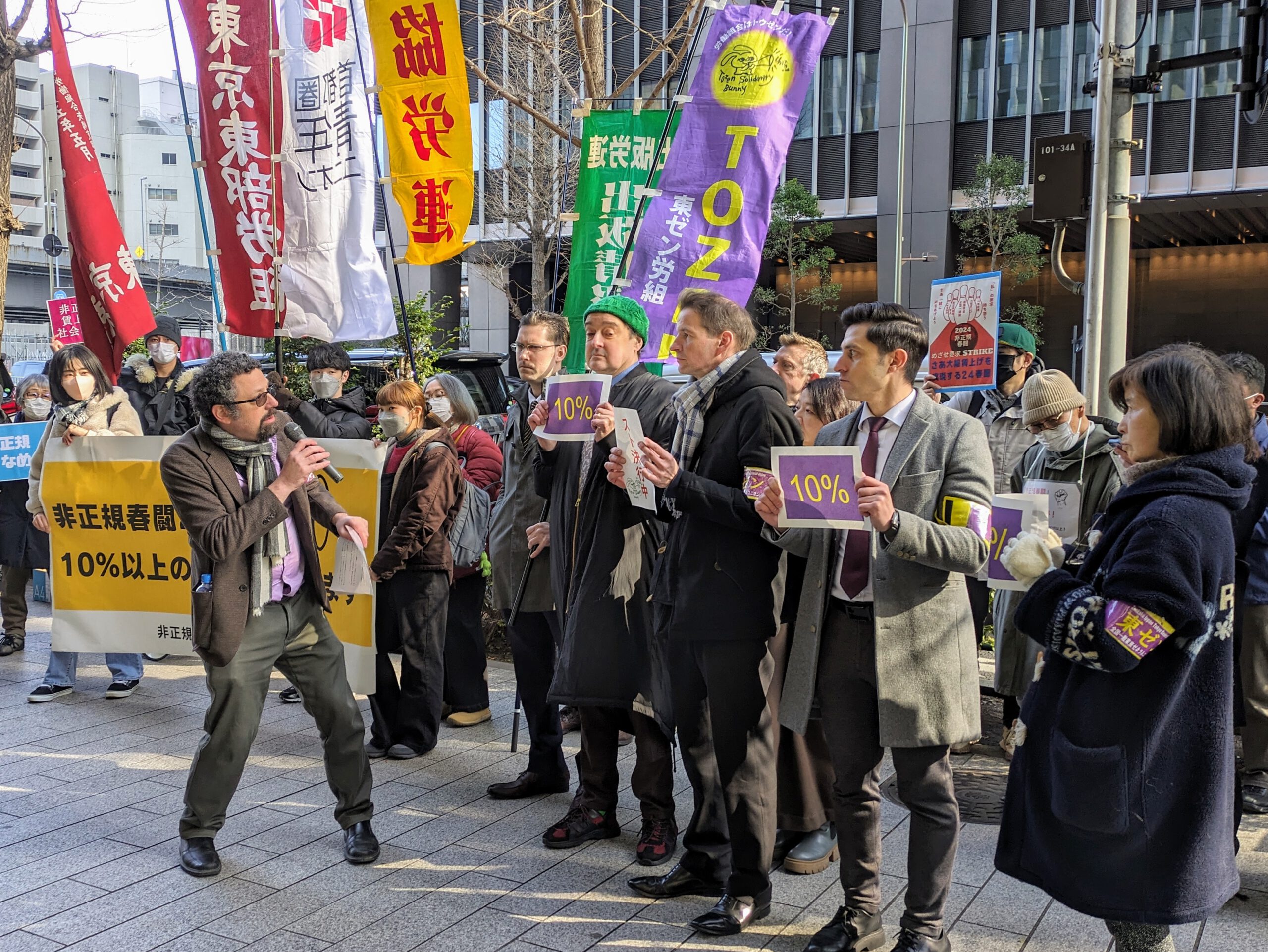
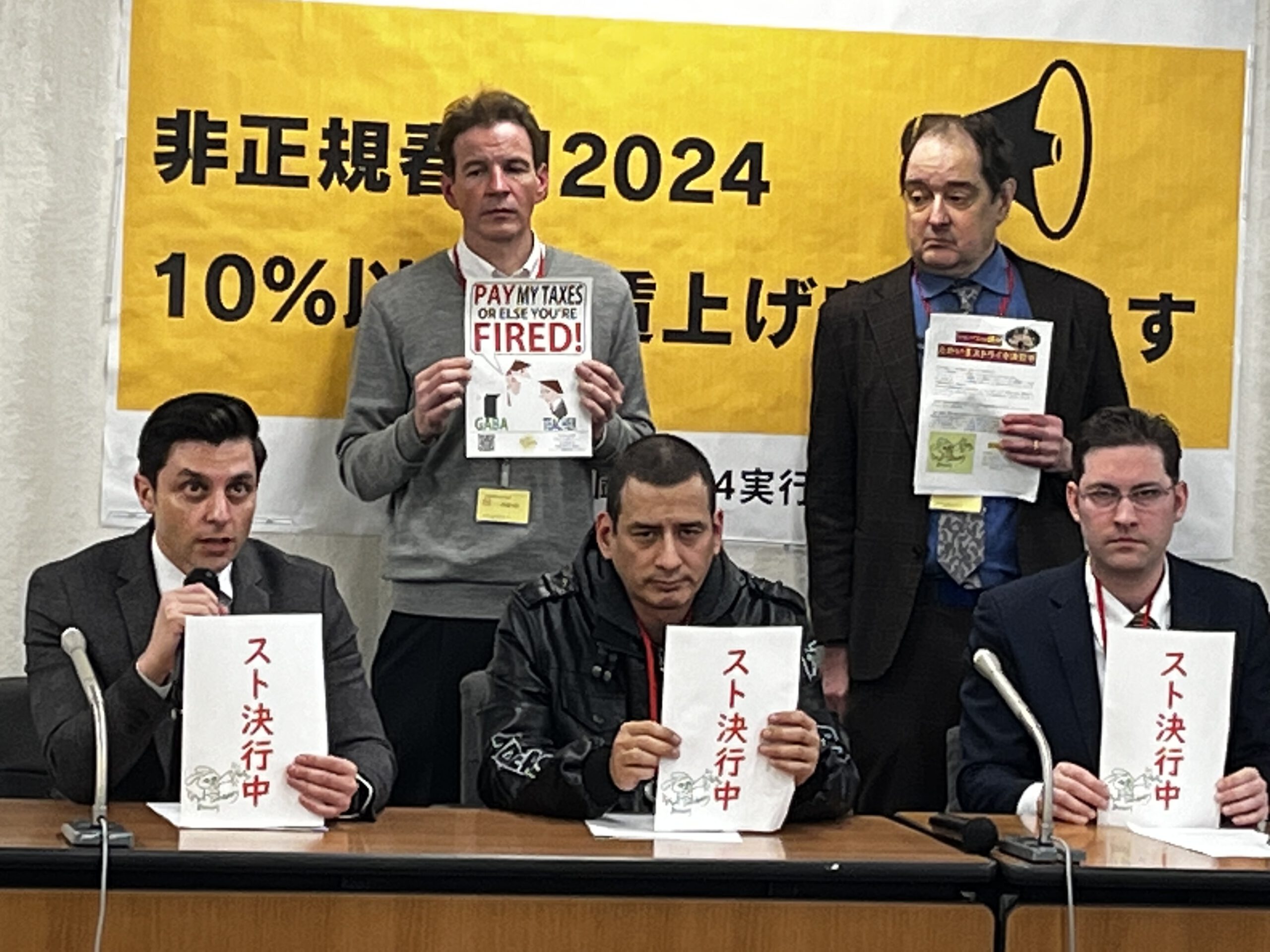
  • Tozen Union and other unions in the Hiseiki Shunto Alliance demanded that Keidanren (Japan Business Federation) stop exploiting those working on fixed-term, temporary, day-labor, short-hour, outsourcing and other contracts lacking job or income security.
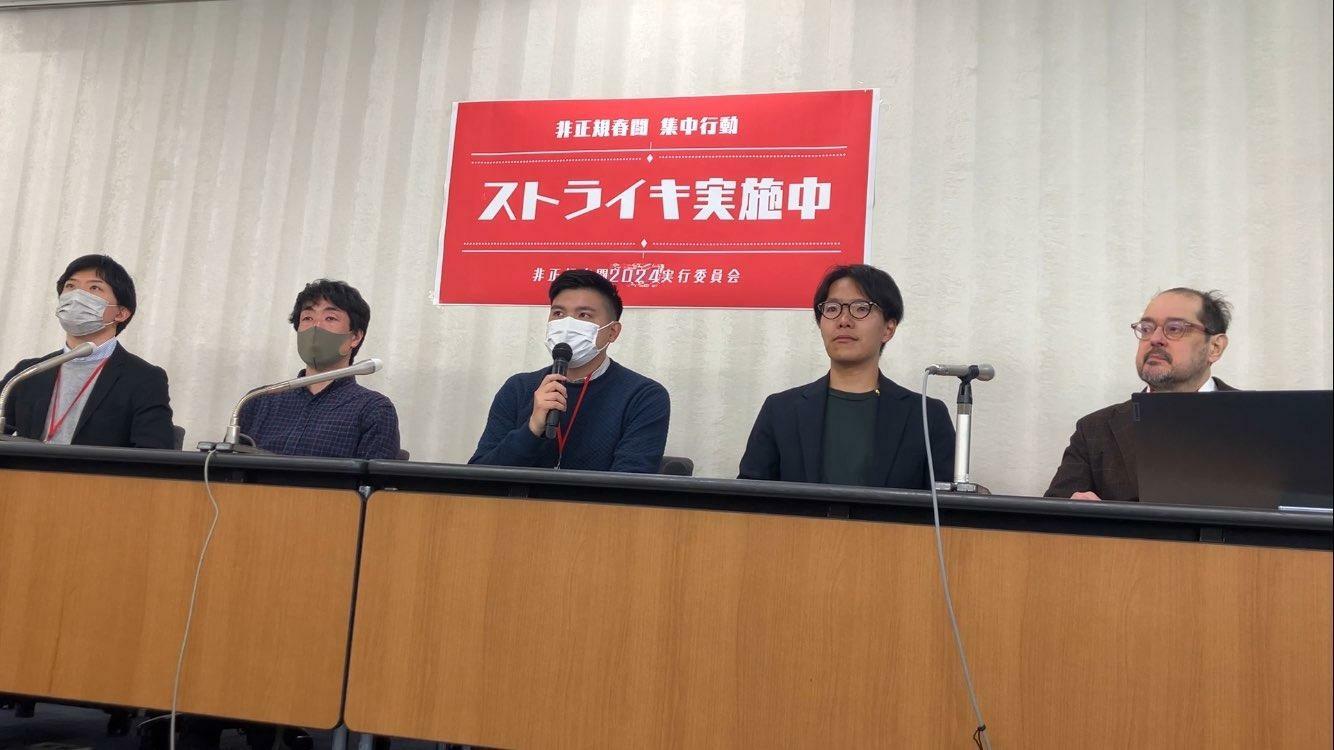
  • The contingent workers unions staged a protest in front of federation’s Tokyo headquarters in front of several major news outlets before then moving to a press conference on the ninth floor of the Ministry of Health, Welfare and Labor.

Tozen fights back against Gaba’s vicious penalties

On Monday 4th December 2023, members of Tozen’s Gaba local took to the streets to protest and fight for their wellbeing.

The video below includes speeches from organiser Louis Carlet, Gaba local President Musashi Sakazaki, and Gaba local General Secretary Mitch Brown.


Mainichi Shimbun cover Tozen’s fight for 10% pay rise

Article written by 東海林智, and originally featured here.

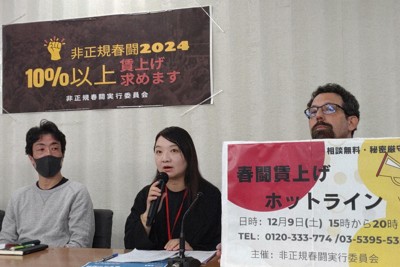
「10%以上の賃上げを」非正規労働者ら、春闘に向け団体設立

非正規労働者らを多く組織する個人加盟が中心の労働組合や地域労組が4日、2024年春闘へ向けた共闘組織「非正規春闘実行委員会」を設立した。物価高による生活苦が社会に広がる中、一律10%以上の賃上げを方針に掲げた。実行委は「一人でも賃上げを求め声を上げることはできる。一緒に賃金を上げよう」と呼びかけた。

Read more

Tozen Daigaku: Civil Service Trade Union Rights (Fiscal Year Appointee System)

In April of 2020, the Japanese government amended local civil service law, reclassifying direct hire ALTs at public schools as “fiscal year appointees.” This so-called reform stripped these ALTs, and all others who labour under the new classification, of their trade union rights. Fiscal year appointees in the new system can no longer demand collective bargaining, conclude agreements with management, or enter into labour disputes. As a result, our ALTs who work for the Tokyo Board of Education were stripped of their right to collective bargaining.

2020年4月、日本政府は地方公務員法を改正し、公立学校において直接雇用されているALT講師を「会計年度任用職員」に再分類しました。 この変更は、これらのALT講師と、新しい分類の下で働くすべての労働者から労働組合の権利を剥奪するものでした。この新しい制度の下では、会計年度任用職員は団体交渉を要求したり、経営陣と協定を締結したり、労働争議をすることができなくなります。その結果として、東京教育委員会に勤務するALT講師は団体交渉権を剥奪されました。

Tozen Union is fighting back.
東ゼン労組はこれに闘います。

私たちの闘いの応援と、寄付をお願いします!
Please support our fight and donate:
https://www.call4.jp/info.php?type=items&id=I0000116

そごう・西武労働組合のストライキの支持表明 Tozen Supports the Sogo Seibu Strike

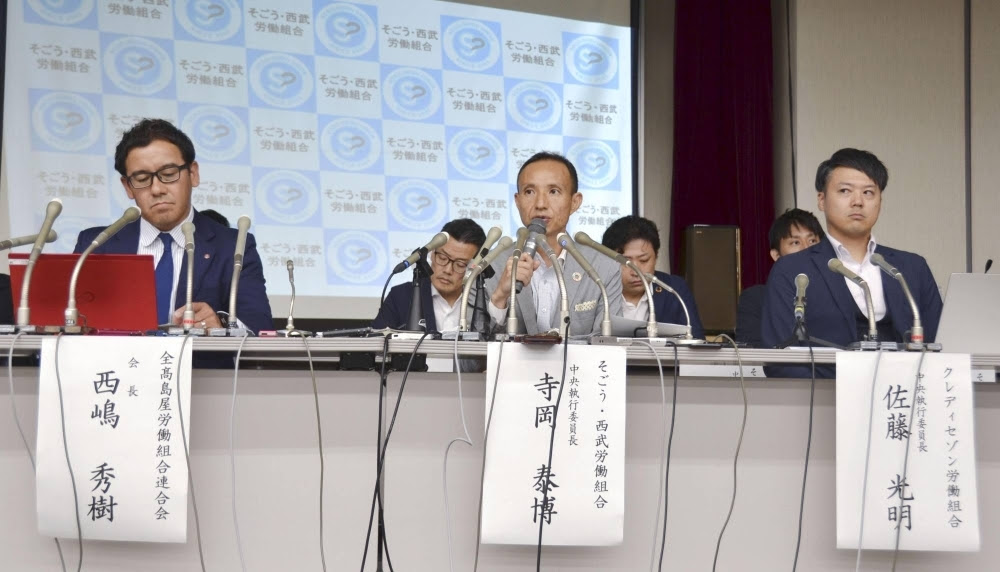
東ゼン労組は、そごう・西武労働組合(寺岡泰博執行委員長)が、本日、2023年8月31日のストライキ権行使を通知したとの報道を受け、同じく連合傘下の労働組合として、当該ストライキを全面的に支持することをここに表明します。

親会社セブン&アイ・ホールディングスは、そごう・西武を米投資ファンドのフォートレス・インベストメント・グループに売却することを決定しましたが、組合は労働者の雇用の喪失を強く懸念し、売却に反対の意思を示しています。近年企業買収の動きが活発化していますが、その過程で労働者の声がかき消されるようなことは断じて許されません。労働者を軽視した経営陣の強引な姿勢に対しては、ストライキ権を行使し徹底的に闘うべきであり、今回、勇気をもってストライキを決意したそごう・西武労働組合に対して、深甚の連帯を示したいと思います。

東ゼン労組も現在、多くの支部で組合員たちがストライキを打って闘っています。大手デパートでは1962年の阪神百貨店以来、実に60年ぶりといわれる今回のストライキ。職種は違えども、同じ労働者として心は常に共に、労働者の権利を守り抜くために最後まで闘う所存です。

全国一般東京ゼネラルユニオン(東ゼン労組)

(連合東京加盟)
執行委員長 奥貫 妃文

Oser s’opposer au licenciement abusif du Lycée Français International de Tokyo!

~Avis de licenciement adressé au personnel de la cafétéria qui préparait les repas des élèves depuis des décennies…

En décembre 2022, deux membres de la branche UPL du syndicat Tozen, qui préparaient depuis longtemps les repas pour de nombreux élèves à la cafétéria du Lycée Français International de Tokyo (LFIT), ont soudainement perdu leur emploi l’année dernière.

Read more

東京国際フランス学園による不当解雇に敢然と立ち向かう!

 ~長年、生徒に食事を作ってきた食堂職員に突きつけられた解雇通告~

2022年12月、東京国際フランス学園(Lycée Français International de Tokyo)内の食堂で長きにわたり、たくさんの生徒たちの食事を作ってきた東ゼン労組UPL支部の2名の組合員は、昨年、突如仕事を奪われました。

Read more

Tozen Union Rallies to Restore Trade Union Rights of Direct Hire ALTs


On Sunday, January 29, Tozen Union, our legal team, and our supporters held a rally to launch our campaign to restore Trade Union Rights to Direct Hire ALTs.

In April 2020, local civil service law was amended and direct hire ALTs around the country were classified as “fiscal-year appointees.” Prior to this change, direct hire ALTs had the right to join a union and demand collective bargaining. This so-called “reform” stripped them of those basic labour rights.

Tozen Union demanded that Tokyo Board of Education meet for collective bargaining in July of 2020. The board refused, and the union sued in Tokyo Labour commission. The case was dismissed late last year in light of the legal amendment. Tozen plans to sue in court to overturn this unconstitutional decision. Our goal is to restore trade union rights not only for fiscal-year appointees, but all civil servants.

We need your help.
Please contact case officer Gerome Rothman at tozen.rothman@gmail.com to find out what you can do.

Bread & Roses: Labor Commission Grants Rights to Uber Eats Union

SNA (Tokyo) — US President Joe Biden ensured that December 2, 2022, will go down as a dark day in the history of the US labor movement. He signed legislation that forces railway unions to accept a miserable contract, robbing them of their right to strike for better conditions. A week prior, the Tokyo Labor Relations Commission provided us a brighter day in labor history with the first ever ruling extending union rights to those engaged in work via an online platform.

The Tokyo Labor Relations Commission ruled that Uber Eats Japan’s “delivery partners” are workers and have all three trade union rights–the right to solidarity, the right to collective bargaining, and the right to strike. The commission ordered Uber Eats Japan as well as two Uber subcontractors that handle delivery driver registration, support, and education to negotiate with the Uber Eats Union in good faith.

The delivery giant registers its deliverers as individual service providers with zero protection under Japanese labor laws, including the key Labor Standards Act and Trade Union Act.

The definition of rodosha (worker or employee) differs depending on which labor law is applied, be it the Labor Standards Act, the Trade Union Act, the National Health Insurance Act, or one of many others. The definition under the Trade Union Act has the broadest scope, so many workers have union rights, but don’t enjoy wage and other rights as stipulated in the Labor Standards Act.

Article 1 of the Trade Union Act stipulates the purpose of the law–to ensure that workers can band together (“combine” in Adam Smith’s terminology) to increase their negotiating position, come to the table with employers as equals, and improve their working conditions.

The Tokyo Labor Relations Commission had to determine whether or not Uber Eats delivery partners (in Uber’s phony circumlocution) enjoy the status of rodosha and its attendant three union rights. The corporation claims that it provides the service of “matching” restaurants and those who want to order food, and thus its platform users don’t “provide labor” to the Uber Eats platform operator.

“Uber doesn’t only provide the platform to the delivery partners,” the judgement read.

The reality is that it is in many different ways involved in the completion of the delivery, and since the delivery partners must complete their deliveries under Uber oversight, it’s hard to conceive them as being nothing more than simple “customers” (platform users). We can strongly infer the possibility of assessing what they do as providing labor to Uber, which runs the business within the overall Uber Eats business.

The following labor ministry checklist, created based on previous jurisprudence, is used to determine rodosha status under the Trade Union Act:

1. The purported rodosha are integral to the business organization
2. Contracts are written unilaterally or uniformly
3. Remuneration is in exchange for labor/work
4. The purported rodosha are expected to accept orders (i.e. not really free to say no)
5. Work hours and locations are determined by the corporation, not by purported rodosha
6. The corporation takes the key risks, rewards, and decisions who does the work

In other words, courts and labor commissions have looked not only at the words written on the contract, but also at the reality of the relationship between the corporation and the purported rodosha.

The Tokyo Labor Commission ruled September 3, 2019, that language teachers working at Gaba had all three labor union rights based on the actual relationship between Gaba and teacher, despite Gaba contracts alleging that instructors are independent service providers. The commission took cognizance of the fact that both Uber Eats and Gaba set forth strict, detailed rules that their deliverers or teachers must follow, contradicting the notion that they are merely intermediaries matching up providers and users.

Gaba appealed its loss to the Central Labor Relations Commission in a case nearing its conclusion. Uber Eats is considering its options, including an appeal to the higher body.

Platform operators like Uber are growing in number, in part due to the impact of the pandemic. Whereas it does afford platform workers a degree of freedom in terms of working times and locations, the jobs inherently lack security, social insurance, and other social safety benefits. Some have called for the drafting of legislation to protect freelancers.

So far, however, Prime Minister Fumio Kishida has not moved forward with policies to protect platform workers.

This ruling is a good first step, to be sure, but it should also be obvious. Corporations are increasingly turning to this model of treating working people and their labor as commodities to enrich themselves and their businesses, while taking zero responsibility for their rights, protections, or welfare.

Let us condemn this insidious corporate machination, even as we welcome this particular verdict.

This article was written by Hifumi Okunuki, and originally published by the Shingetsu News Agency (SNA).

Bread & Roses: Bosses Can’t Force Workers to Quit

SNA (Tokyo) — Kata-tataki, or taps on the shoulder, indicate a series of actions a boss takes to drive a worker to quit without outright firing them. It establishes that the subsequent contract termination is mutually agreed, as opposed to a unilateral and contestable firing. The legal jargon for such “shoulder tapping” is taishoku kansho. In this installment of Bread & Roses, I’d like to explain the practice and introduce a recent, surprising verdict in a court case over its validity.

Read more