English teachers say sayonara to a not-so-super Nova

TEACHING English in Japan: a working holiday in a truly strange and different country (to those of us not Japanese); getting paid for talking your own language in a classroom; spare time and funds for culture in Kyoto, night-clubbing in Shinjuku, deep powder snow around Nagano. Or whatever.

It seems so cool and out-there — at least before Nova Corp went belly-up on October 26 — that it’s faintly surprising there hasn’t been a big travellers’ novel out of it, or a quirky movie.

The reality is more raw, though. An artist that The Australian spoke to, but who asked not to be identified, came to work while gathering material and studying Japanese techniques but left sick and angry, he says, because of his experiences as a Nova English instructor.

Sydneysider Natasha Steele arrived almost 10 months ago, planning on a year’s stay. One of 900-odd Australians aboard when Nova went down, she was a short-termer, but no dilettante.

“I was a bit discontented (in Australia), I wanted to do something different, more fulfilling, and before I came here I took the CELTAC (Cambridge English Language Teaching of Adults Certificate); that alone cost me $3000,” says the 26-year-old marine science and management graduate.

“I wanted to make a difference — if Japanese people wanted to learn English, then I wanted to help them the best I could to do that.”

Steele was broke after university and now she’s broke again. She’s making the best of her remaining stay here by campaigning for just treatment of about 4000 foreign instructors and 2000 Japanese staff stranded by the collapse. “I just don’t want to end up regretting my time here.”

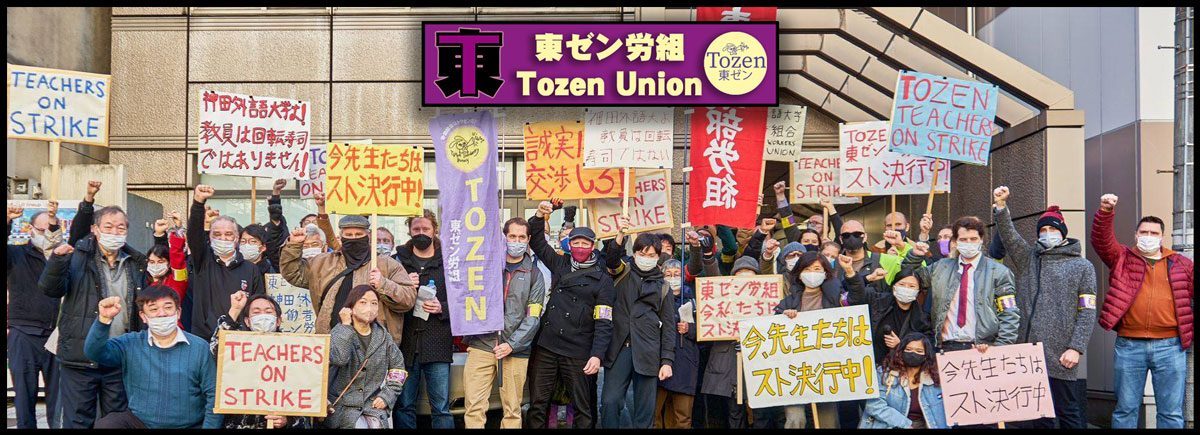
Nor does Bob Tench, an Englishman who taught at a Nova school in Shinjuku and who now heads the National Union of General Workers’ Nova division. His life is here; he came in 1994 and recently married a local woman.

Tench claims that once he became active in the union, in response to worsening work conditions, Nova management retaliated with tougher teaching schedules and the annual threat of losing his job and visa: all the instructors are on one-year contracts.

Another Nova technique was to extract advance-paid tuition fees; amounts for the contracts valid over three years varied between Y600,000 and Y900,000 (about $5740 to $8570) according to a recent Ministry of Economy Trade Industry report.

More than 300,000 adult students and parents were caught short by the collapse.

Those people are now variously reported to be owed between Y40 and Y70 billion. The court-appointed administrators refused to comment. G.communications, a small operator, has undertaken to rehabilitate part of the business but won’t pick up the fees liability.

The instructors’ view of the proposal is summed up by a posting on the website LetsJapan.org. “Jobs or the same old shit?”

There are no verifiable figures available, but Kyodo news agency, quoting “sources”, claims that in the event of a full liquidation, the final deficiency could be Y98.5 billion.

The Japan Association for the Promotion of Foreign Language, claiming to represent most of the substantial language schools (but not Nova, which till recently constituted about half the total industry) advises members to charge no more than a year in advance. The Australian randomly checked three; they were charging advance fees for courses between 15 and 27 months. Nozomu Sahashi, the 56-year-old former president, founded Nova in 1981 with Anders Lundqvist, a Swede who became education director.

He proceeded to revolutionise commercial language business here.

As well as classrooms and face-to-face tuition, Nova offered remote teaching, flexible hours, aggressive price discounting and in recent years its branches mushroomed crazily.

It slogan was ekimae ryuugakku, “study overseas, in front of (every) train station”.

Earlier this year, there were 914 branches, though the number by October had plunged to 670.

Nova’s promotional spending was also phenomenal. The pink Nova-Usagi (Nova Bunny) became one of this brand-obsessed nation’s most recognisable commercial symbols. METI estimates 1.1 million people pay fees for English lessons annually, mostly, in effect, for remedial teaching.

Nova’s foreigners were not usually teachers per se, but graduates of many types on working holidays, paying off student loans, or in search of Japanese experiences. They were, relatively speaking, cheap labour and Nova cut corners to make them cheaper.

Though inevitably some decided to settle in Japan, most looked to stay a year or so. Short-stayers were generally less concerned than permanents like Tench about conditions such as statutory social insurance (which Nova was reluctant to pay, unless to an associated company that has also now gone under).

The standard pre-tax salary recently for foreign instructors was Y250,000 (about $2350 monthly), less Y66,000 for a rented, shared apartment (teachers could make their own arrangements but were encouraged to use housing organised by Nova).

Discipline of Japanese and foreign staff was strictly enforced and associations between teachers and students beyond the classroom were prohibited.

“They were advertising us as the attraction and then forbidding us to mix socially,” says a former instructor. “I accept that some foreigners’ behaviour left plenty to be desired, but when we’d go out for a meal or a drink, mostly it was the students asking to join us.”

Unionism also was discouraged by Nova management — though not overtly, because that’s against the law — and teachers who did join up say they were singled out for tougher schedules and sometimes sent to more distant branches.

High turnover was sustained by a big, continuous recruitment effort: Nova had offices for that purpose in Australia, the US, Canada and Britain and New Zealand. In Australia, the Brisbane office’s efforts were supplemented by a Melbourne-based company, Australia Asia Centre for Education Exchange (AACE), which says it advised its fresh recruits to postpone or cancel departures once Nova began delaying instructors’ pay. AACE ended the relationship on October 1.

But Nova offices continued signing and sending people to the end. “The most shocking thing to me was they were still recruiting in Canada in the last weeks when they knew they couldn’t pay them,” said a Canadian official.

But the worm was in the apple well before then and the real problem was students, rather than teachers becoming leery of Nova.

For years, complaints had been mounting, mainly from people wanting to discontinue lessons but finding refunds extremely difficult to obtain. “English lessons are the kind of things people change their mind about, especially if they’ve bought three years’ worth,” says a financier who has studied the operation.

Nova Bunny notwithstanding, the brand was getting grubby and Nova’s market share fell from 51 to 47 per cent in 2005 and to 45 per cent last year — all amid the huge branch expansion.

As complaints mounted, shinpan credit companies — used by about 20 per cent of students to raise their up-front fees — started refusing to fund Nova contracts. In April the Supreme Court ruled Nova refund restrictions illegal and in June METI punished the company for lying in some promotions by closing off some courses to new students for six months.

Sahashi had run the business side of Nova almost manically single-handed, while Lundqvist managed the education operations, and suddenly Nova was being hit by blow after blow. Customers were peeling away and not being replaced so that by September, on one informed estimate, Nova was getting in Y1 for every Y4 walking out the door.

Reports documenting the company’s rise during the 1980s and 1990s had depicted the Nova crowd as youthfully innovative in their approach. A more forthcoming Sahashi then said he started the business because foreign backpackers were always sleeping on his floor. In the early days “the school was in a constant buzz and gave off a massive amount of energy”.

The picture gradually darkened, however. Sahashi’s private life and intra-office relationships were reported to have been hectic and the Nova image now fixed in the public mind is the ex-president’s office-cum-playhouse in Osaka.

More than 300 square metres, it was draped in scarlet velvet and scattered with stuffed Nova Bunnies. There was a traditional Japanese tea-room and the less-traditional double bed.

A week after the wrecked group went into administration, news crews were led tut-tutting through these quarters and that led all the commercial TV news that night.

Sahashi was annoyed that the administrators would use the executive floor to misrepresent “him using the company to benefit himself”. At least that’s what his lawyers said. Sahashi has refused to reveal himself since July, communicating with increasingly desperate staff by faxes, promising wages that arrived late and then not at all.

His lawyers asserted the former president’s chambers served as “as a model home office to demonstrate the advantages of such a space”. But Sahashi had a similar facility in Tokyo. It was “like a weird guy’s idea of a love hotel” said a recent visitor.

Lundqvist and his co-directors brought the farrago to an end, apparently losing faith in Sahashi’s claims he could raise Y4 billion — and then, soon, Y6 billion — to keep the show rolling. In his absence on October 25, they voted Sahashi out and next morning filed for administration.

The possibility of Lundqvist emerging in charge of a restructured Nova didn’t fill the teachers with joy. “He has been intimately involved in the way Nova has been run from the beginning,” says Tench. “He didn’t have perhaps the same trappings as president Sahashi — the Playboy Penthouse — but he knew everything that was going on so, so if the company acted improperly, he was part and parcel of that.”

Another former long-term teacher and unionist, Tristan Sime, says foreigners who rose under Lundqvist from teaching to supervisory positions were “cult-like” in their devotion to the company’s methods.

Lundqvist’s response? “I am sorry but I can’t talk to you now and I don’t have any comments for you, anyway. I will never be able to talk to you. Goodbye.”

A charming and forthright man, obviously, but could you trust him with your job?

http://www.theaustralian.news.com.au/story/0,25197,22812113-23850,00.html

Nova faces long road back

With Monday marking one month since English-language school operator Nova Corp. filed for court protection, there is still no prospect of students receiving refunds on tuition fees and many Nova employees have chosen to leave their jobs.

G.communication Co., a Nagoya-based language-school operator, has taken over Nova operations and resumed offering lessons at 25 branches since Nov. 14, including the Kurokawa branch in Nagoya, which on Nov. 16 was the first to reopen.

The Hyogo-Koshien branch in Nishinomiya, Hyogo Prefecture, on Sunday became the first to resume operations in the Kansai region, where the company was headquartered. Seven students attended lessons on the day.

A foreign instructor at the branch said, “I’m so glad we could start lessons again.”

One student said: “Lessons resumed sooner than I expected, so I’m relieved. But I hope the branch closest to my home, which I used to go to, will reopen soon.”

Four branches in Tokyo–including Akabane in Kita Ward and Katsushika-Koiwa in Edogawa Ward–will be shortly reopened.

G.communication plans to reopen about 80 branches by the end of December at the earliest. The firm hopes that within six months to one year from now, lessons will be offered at 200 branches.

Among about 4,900 Japanese employees and foreign instructors that worked for Nova, more than half are likely to be rehired by G.communication. About 70 percent of foreign instructors, many of whom have been forced into poverty due to Nova’s failure to pay their wages, are likely to accept job offers from G.communication.

“Many students were hard workers and I’m attached to them,” a 50-year-old Australian man who used to work at the Tennoji branch in Osaka said.

However, about half of Japanese employees, including executives of key departments, are expected to refuse G.communication’s offer and quit Nova.

G.communication is said to have used aggressive merger and acquisition techniques to expand its business. Former Nova President Nozomu Sahashi was known for his autocratic management style.

One former Nova executive who has refused the job offer from G.communication said, “[G.communication’s business style] reminds me of [Sahashi].”

When Nova filed for court protection, it had about 300,000 students. Many of them do not know whether they will be able to continue lessons.

Students can continue lessons, redeeming prepaid tuition points, if they pay an additional 25 percent of the standard tuition fee. However, not all 670 branches will be reopened.

Nova became hugely popular due to the convenient locations of its branches, advertised by the firm as offering “ekimae ryugaku” (studying near your train station). However, G.communication Chairman and President Masaki Inayoshi said, “We’ll maintain the ‘ekimae’ style, but we won’t be so picky about prime locations.”

Some students have claimed they will be unable continue lessons if branch locations are not as convenient as they were, and the number of students could drop depending on the locations of reopened branches.

In addition, it is unclear whether G.communication has the resources to manage branches across the nation.

Nova shares closed at 1 yen on the Jasdaq stock market Monday–the last day of Nova stock dealing–dropping from 2 yen at Thursday’s close.

The stock was valued at 6,610 yen just after it went public in November 1996, but from mid-September this year, when the firm was found to have delayed wage payments to its staff, the price hovered at about 50 yen.

http://www.yomiuri.co.jp/dy/national/20071127TDY01301.htm

Interac in the News

This is an archived post from the old General Union Interac Branch website, written by an undeclared union member (thus the nickname rather than the name):

Hi all. Corrector here.

Many of you may have seen this before through the original link on Let’s Japan earlier this year, but I wanted to highlight the story here as well. This report aired on NHK on June 30th, 2007. The first part covers a bit of NOVA (old NOVA that is, not neo/G.Communications/NOVA), and then the second part covers the hardships of some awesome people working as teachers in Chiba under the strangling gauntlet of Interac…

If anyone wants to volunteer to write an English transcript for those who may need/want it, feel free to send it my way and I will post it. Otherwise, you will either have to wait until I have the time, or just visit the aforementioned Let’s Japan entry to get all the details.
Kudos to Shawn for running a great blog/forum.
These videos originally posted and donated to us by several members who are in the video (which should give us plenty of rebroadcasting rights).

We will be posting more surveys, information and entertaining diatribe shortly so stay tuned…
Solidarity.

Gov’t must think hard about fingerprinting foreigners

Japan has started a new system obligating foreigners entering the country to provide their fingerprints and face photos. The United States started a similar process following the Sept. 11 terrorist attacks and the government has gone along with this, revising the immigration law to make it obligatory for foreigners to take these steps.

Data collected from foreigners entering the country will be matched with that assembled on about 18,000 fugitives on Interpol and Japanese law enforcers’ lists, as well another roughly 800,000 who have previously been deported from Japan with the aim of preventing entry into the country for those who match the data.

The Justice Ministry insists that the measures are an anti-terrorism step and Justice Minister Kunio Hatoyama created controversy with his statements about an associate in Al-Qaeda, and there are doubts about how effective this process will be. The system still makes it very difficult to capture terrorists who have no prior convictions and it is not possible to say that the government can adequately cover every port of entry, especially when it comes to those entering by sea and particularly those smuggled in.

Where the system will show its teeth is combating those entering illegally using false passports. Of the roughly 56,000 people deported from Japan last year, about 7,300 had been expelled from the country at least once before, including some foreigners who should never have been allowed into the country in the first place, and immigration authorities were widely criticized for their lax control. Immigration and law enforcers also had to suffer a backlash after it was learned that fugitive members of the Japanese Red Army had been sneaking in and out of Japan using false passports. But the new system should make it impossible for repeated re-entry into the country using false passports. The new system should also prove effective in countering the crime gangs who leave the country following raids, come back in again once things have calmed down and then flee once more.

Surrounded by water on all sides, immigration authorities obviously saw implementation of the current system as a task of great importance, but there are many things that need to be taken into account when considering this first attempt at halting crime by foreigners coming to Japan. To ease the problems associated with taking people’s fingerprints and keep the system in process, naturally clear explanations of the system are necessary and it goes without saying that steps must be taken to make sure the data collection process is spread up so that it does not become a burden on those foreigners entering the country.

The ministry must also clearly state the standards by which collected data will be preserved and handled. Going by what the ministry has said so far, the data collected will not be necessary if the person who presented it is not on any of the lists used for comparing it with. Even considering keeping the fingerprints and photos on file in case of trouble while the presenter is in the country, this data should be destroyed when the person leaves the country, or at least after a set period of time. There should be a set limit for how long this data can be kept. Considering that there have been many criticisms of faults in the U.S. system, the government must, on the basis of controlling individuals’ private information, set clear steps of the processes involved in dealing with what happens when somebody’s details match those on the lists and what happens when somebody is mistakenly added to those lists. It is also essential that punishments be put in place for any misuse of the information obtained.

The ministry must also outline its long-term vision of how it plans to improve the working conditions of foreign laborers in Japan and unskilled foreign workers in the country. Japan has been widely criticized for the abuse and poor payment that foreign trainees coming to this country have received here and it is a fact that many of the foreign laborers here without visas are widely appreciated. When tightening immigration controls, the government must also make sure that this does not lead to unfair discrimination and also protects the rights of foreign laborers coming to work here.

If the government attaches too much importance to dealing with criminals at the expense of foreigners coming to Japan or gaining international trust, the new system will not receive widespread support.

http://mdn.mainichi.jp/national/news/20071124p2a00m0na028000c.html

Giving you the finger

A controversy over fingerprinting foreigners

IN 1641 Japan’s shogunate designated an artificial island in Nagasaki harbour as the only place foreigners could live. Japan has of late been more welcoming to gaijin. Yet this week it began to photograph and take digital fingerprints of all foreigners entering the country?residents as well as tourists and visiting businessmen. Privacy advocates deplore the emergence of a surveillance state. Pundits say it panders to anti-foreign sentiment in Japan, and undermines the country’s ambitions to increase tourism and make Tokyo a global financial centre. Angry expats expect long waits at immigration.

In defence, the government says the measures are simply to keep terrorists out. As an example, Japan’s justice minister, Kunio Hatoyama, a butterfly enthusiast, explained that a friend of a lepidopterist friend was an al-Qaeda operative, who for years travelled in and out of Japan on fake passports; the new measures would block the chap. Mr Hatoyama was quickly forced to backtrack lest it appear that ministers run around netting butterflies with terrorists. Yet the truth remains: terrorism in Japan has only ever been home-grown, most recently in 1995, when a sarin gas attack by a religious cult killed 12 in Tokyo’s subway.

The system mirrors America’s equally controversial US-VISIT programme. In principle, it should not cause such a fuss. All countries are moving towards the collection of biometric information: from next year, Britain will collect such data from visa-holders. The problem comes with implementation. America’s US-VISIT system is fraught with flaws and cost overruns. Technical problems have delayed Europe’s introduction of digital passports. For all Japan’s prowess in designing computers, the government is peculiarly inept at running them. This year, it admitted it had lost 50m electronic-pensions records.

Exempt from the new screening are diplomats, children under 16 and certain permanent residents (ethnic Korean and Taiwanese who have lived in the country for generations). Why only gaijin? Japan already has all sorts of ways to keep watch on its own people, such as ?neighbourhood associations?. Foreigners are outside these social controls. Yet fingerprinting foreigners is just a first step to securing the biometric details of everyone entering and leaving: as it is, frequent travellers, Japanese as well as foreign residents, may save time by pre-registering to use an unmanned automatic gate at airports that takes photographs and fingerprints.

Mr Hatoyama says people should not be delayed more than the 20 minutes it already takes immigration officers to process visitors. This week some of the machines played up, but most travellers fell into line. Officials even claimed to have caught a handful of people who had already been deported at least once. They did not reveal whether they were butterfly collectors.

http://www.economist.com/world/asia/displaystory.cfm?story_id=10184633

Rally targets Justice Ministry

Dozens of protesters, both foreign and Japanese, gathered outside the Justice Ministry on Tuesday to voice opposition to the new policy of fingerprinting and photographing visitors entering Japan.

The biometric screening system was launched Tuesday over the strong objection of foreign residents as well as human rights organizations, including Amnesty International Japan [and NUGW Tokyo Nambu].

http://search.japantimes.co.jp/cgi-bin/nn20071121a2.html

Gov’t orders forced fingerprinting of foreigners refusing to give prints at entry ports

The Justice Ministry has instructed regional immigration bureaus to forcibly take fingerprints from foreigners who refuse to be fingerprinted or to leave the country, sources close to the ministry said.

The ministry’s Immigration Bureau sent the directive to regional immigration bureaus prior to the introduction of a system on Tuesday, under which all foreigners who enter Japan, except for a limited number of people such as special permanent residents and visitors under the age of 16, must be photographed and fingerprinted at airports and ports.

The ministry had explained that it had no intention of forcibly taking fingerprints from foreigners who visit Japan.

The directive cites a clause in the Immigration Control and Refugee Recognition Law, which empowers immigration officers to conduct body checks on foreign visitors if such measures are necessary for safety reasons. It then urges immigration officers to forcibly take fingerprints from those who refuse to cooperate and film them on video

http://mdn.mainichi.jp/national/news/20071121p2a00m0na033000c.html

Protesters ‘flip the bird’ at Justice Ministry over forced fingerprinting

Protestors inflated a 3-meter-high yellow hand with an extended forefinger and thrust it toward the Justice Ministry’s offices in Tokyo on Tuesday to demonstrate against a controversial fingerprinting policy beginning at ports of entry across the country the same day.

About 80 protestors turned toward the ministry building and shouted in unison their opposition to the new policy, which requires all but a handful of foreigners to have their fingerprints and face photos taken to gain entry into Japan.

Representatives of human rights groups, labor unions, foreigners’ groups and individuals spoke out against the system — similar to the US-VISIT policy operating in the United States since 2004, but also targeting residents and not just tourists — calling it, among other things, “racist,” “xenophobic,” “retrogressive” and “an invasion of human rights and privacy.”

“It’s an expression of Japanese xenophobia. Japan is using this system as a tool to control foreigners. For the past few years, the government has been associating foreigners with things like crime and terrorism,” said Sonoko Kawakami, campaign coordinator for Amnesty International Japan, which organized Tuesday’s demonstration.

Lim Young-Ki, a representative of the Korean Youth Association in Japan, pointed out how ethnic Koreans had fought for decades until the 2000 abolition of fingerprinting on Alien Registration Certificates only to see the process revived through the back door now.

“This system is ostensibly an anti-terrorism measure, but it is extremely harmful to individuals and only applying the system to foreigners shows a lack of consideration for foreigners’ human rights. Even though the system of fingerprinting foreigners was completely abolished in April 2000, it’s infuriating that the Japanese government has reinstated this practice and this entry inspection system,” Lim said, reading a statement issued by his organization. “We want to use this demonstration to call on the Japanese government to promptly redress this system obligating foreigners to provide their fingerprints and face photos whenever they enter the country.”

Catherine Campbell of the National Union of General Workers [Tokyo Nambu], whose ranks contain many foreigners, echoed a similar line.

“This is a big step backward and I really think it’s sad,” she said.

Another foreign woman who identified herself only as Jennifer said she is a permanent resident, having lived in Japan for 38 years and with a Japanese husband and Japanese national children. She spoke about having previously provided authorities with her fingerprint and face photo while taking out and updating her Alien Registration Certificate.

“They already have my photo and my fingerprint…many times over,” she said. “This step is quite unnecessary.”

But an official from the Justice Ministry’s Immigration Bureau dismissed the protestors’ claims.

“This system was introduced to protect the lives and safety of citizens by preventing terrorism. There were rational reasons and necessities in introducing the system, which was approved by the Diet,” Yasuhiro Togo of the Immigration Bureau said, adding that the methods of fingerprinting differ from the abolished Alien Registration Certificate system. “The aim of taking fingerprints is different — we’re fighting against terrorism — and we will not be forcing people to put their fingers into ink as used to be the case. The fingerprints will all be taken and stored electronically.”

Changes to the immigration law in May last year allowed for the collection of biometric data. Now, except for special permanent residents — who are largely people born and bred in Japan — diplomats, children under 16 and others the government deems can be excluded, any non-Japanese entering the country must provide the fingerprints from the index fingers on both hands and a photo of their face before they can be permitted to enter the country.

The government says the new system is aimed at combating terrorism, but has also said it will provide data to crime-fighting authorities upon request. The Immigration Bureau’s Togo said such information would be handled in accordance with the Private Information Protection Law. He added that information collected by immigration authorities would not be handed over to foreign governments.

http://mdn.mainichi.jp/national/news/20071120p2a00m0na020000c.html

Watching them watching us

‘Fingerprint Day’ adds insult to injury for Japan’s foreign community

From July 3 to 11, 2005, U.N. special rapporteur Doudou Diene visited Japan to assess the factors of discrimination that affect a variety of minority groups in this country. In his final report, he recommended that the Japanese government should “avoid the adoption of any measure that would discriminate against foreigners, as well as in the exercise of all their rights and freedoms, in particular their right not to be persecuted and perceived as potentially more dangerous than the Japanese.”

Unfortunately, the government, today [the day that the government begins fingerprinting virtually all foreigners], officially commences measures that are greatly contrary to those recommended by the U.N. special rapporteur. As the Japan National Tourist Organization approaches the midpoint of its five-year Yokoso Japan Campaign, visitors and most non-Japanese residents will now be “welcomed” to Japan by an unconscionable demand for their fingerprints and photos, followed by near constant surveillance of their activities, and possibly even the occasional detention for up to 23 days. Yokoso Nippon! Welcome to Japan!

http://search.japantimes.co.jp/cgi-bin/fl20071120zg.html

Starting today, ‘gaijin’ formally known as prints

Today sees the introduction of a law requiring the majority of foreigners entering Japan to be fingerprinted and photographed. This change has been met with howls of protest from foreign residents and the foreign media, who have pointed to the fact that the only terrorist attacks on Japanese soil have been carried out by Japanese.

Matters were not helped by recent comments from Justice Minister Kunio Hatoyama, who attempted to justify the law by saying a “friend of a friend” of his was an al-Qaida operative who had entered Japan a number of times, using a different fake passport on each occasion.

In an effort to get an inside perspective on the new law, I wrote to a high-ranking Ministry of Injustice official closely involved in the planning and implementation of the measure. My source, who wishes to remain anonymous, sent the following statement by e-mail:

“Firstly, let me explain exactly what Mr. Hatoyama meant by his comments at the Foreign Correspondents’ Club. What he was trying to emphasize was the relative ease with which foreigners bent on causing harm can enter Japan. Rather than giving dry statistics or resorting to vague and empty scare tactics, Mr. Hatoyama thought it would be better to give a concrete example of why this law is necessary. He also hoped to show that, despite his position as justice minister and scion of one of Japan’s most famous political families, he is comfortable moving in any social circle. In hindsight, his choice of words was perhaps inappropriate, but the truth in what he said is undeniable. The simple fact is that this law will make Japan a safer country by tightening its borders and preventing would-be terrorists from entering.

“The main beneficiaries of this law will not be the Japanese or even foreigners living here, but foreigners who haven’t even been here, and the international community as a whole.

“Take the bankruptcy of Nova Corp. Thousands of foreign teachers have been left jobless and facing eviction in a country where many of them cannot speak the language. Had this new law been enacted years ago this unfortunate situation could have been avoided.

“Consider why these people came to Japan ? to teach foreign languages, mainly English, to Japanese people. Why do Japanese people want to learn? Partly to help foreign visitors who come to Japan for pleasure or business. The unique history and culture of Japan attract millions of visitors to these islands each year. However, the new law will significantly reduce this number so the need for foreign language teachers will decline sharply, and it is highly unlikely there will be a repeat of the Nova fiasco.

“In addition to protecting people from taking risky teaching jobs in Japan, this law will also help reduce the effect of brain drain on a number of countries. Huge numbers of Asians currently take advantage of Japan’s generous immigration laws to come here and work. Although they often send money home, the fact that they have had to move overseas has a serious effect on the quality of the workforce in their home country. Again, the new law will reduce the number of foreigners in Japan, and the benefits of this will be felt throughout Asia as countries’ brightest brains choose to stay and work in the land of their birth.

“The new immigration controls will also impact on globalization and its benefits for developing countries. The new law will probably cause some companies to close their offices in Japan and relocate to countries with less stringent border controls: developing nations in Asia, for example. As it has done in the past, the generosity of the Japanese government will allow other countries to develop economically and socially. Japan is a rich nation, but not a greedy one, and is glad to spread the benefits of globalization and free markets as widely as possible. This new law will indirectly allow us to do so.

“Of course, there will be benefits for the Japanese: Fewer foreign workers will mean more jobs for Japanese and this may go some way toward combating the growing income gap in Japan. Also, the pressure to learn English will be reduced, and this will allow Japanese people to spend more time studying their own country’s history, traditions and culture. English will become an optional language for those who really want to study it, and there will still be enough foreigners here to meet the reduced demand. But, as I outlined above, the main benefits will be felt internationally, as Japan steps back slightly on the world stage and graciously allows some other countries the chance to shine.”

http://search.japantimes.co.jp/cgi-bin/fl20071120a1.html