Opponents of change to immigration law fear loss of privacy, other human rights violations
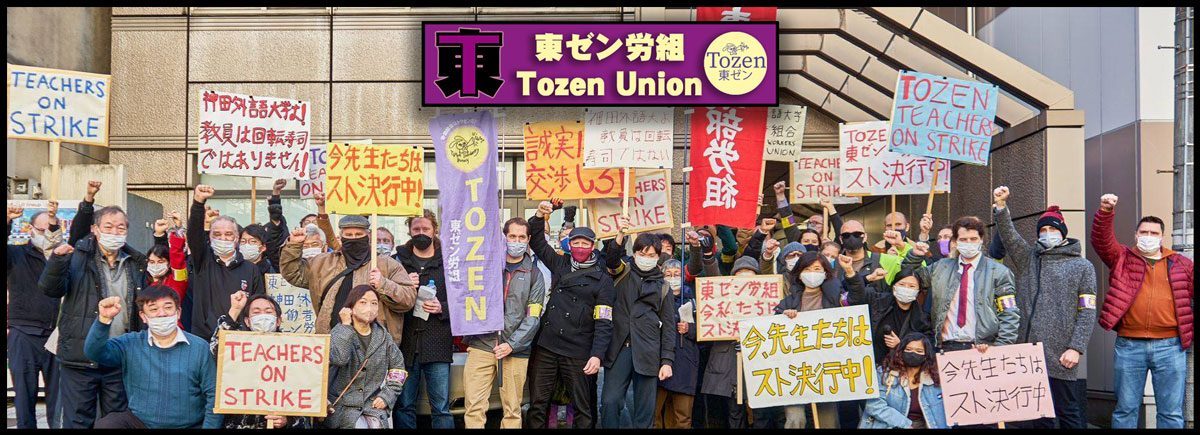
More than 200 people [including former members of the National Union of General Workers Tokyo Nambu] rallied in Tokyo’s Shinbashi district Sunday to protest government-sponsored immigration bills they claim would violate the privacy of foreign residents and strengthen government control over them.
The protesters say the proposed system would allow the government to punish non-Japanese who fail to properly report their personal information, and could even make it possible for immigration authorities to arbitrarily revoke their visas.
IC you: bugging the alien
New gaijin cards could allow police to remotely track foreigners
When the Japanese government first issued alien registration cards (aka gaijin cards) in 1952, it had one basic aim in mind: to track “foreigners” (at that time, mostly Korean and Taiwanese stripped of Japanese colonial citizenship) who decided to stay in postwar Japan.
Gaijin cards put foreigners in their place: Registry is from age 16, so from a young age they were psychologically alienated from the rest of Japanese society. So what if they were born and acculturated here over many generations? Still foreigners, full stop.
Even today, when emigrant non-Japanese far outnumber the native-born, the government tends to see them all less as residents, more as something untrustworthy to police and control. Noncitizens are not properly listed on residency registries. Moreover, only foreigners must carry personal information (name and address, personal particulars, duration of visa status, photo, and — for a time — fingerprints) at all times. Gaijin cards must also be available for public inspection under threat of arrest, one year in jail and ¥200,000 in fines.
However, the Diet is considering a bill abolishing those gaijin cards.
Sounds great at first: Under the proposed revisions, non-Japanese would be registered properly with residency certificates (juminhyo). Maximum visa durations would increase from three years to five. ID cards would be revamped. Drafters claim this will “protect” (hogo) foreigners, making their access to social services more “convenient.”
However, read the fine print. The government is in fact creating a system to police foreigners more tightly than ever.
Exploited workers lose $20B a year
The exploitation of workers is a huge business worldwide.
People forced to work without pay collectively lose more than $20 billion a year in earnings, according to a report from the United Nations International Labour Organization released Tuesday.
Global profits from human trafficking and forced labor have reached $36 billion, according to the United Nations, and that sum is climbing.
“Forced labor is the antithesis of decent work,” ILO Director-General Juan Somavia said in a statement as the report became public. “It causes untold human suffering and steals from its victims.”
“It is the vulnerable who suffer the most” in times of economic crisis like the present, the report says.
Japan: Birthrate report shows it’s not getting any younger
A report says Japan’s ratio of children is now down to 13%, boding ill for the labor pool and pension funds.
Japan, which designates every May 5 as Children’s Day, had fewer children to celebrate the holiday for the 28th straight year, underscoring a demographic shift that could eventually wreak havoc on the world’s second-largest economy.A government report released this week says the number of children younger than 15 as of April 1 had fallen to about 17 million. Japan’s proportion of children — which has been declining for 35 years — now stands at just 13% of the country’s 128 million people.
In contrast, Japan’s elderly population is swelling. The number of people 65 and older has reached 22.5% and continues to climb.
The unprecedented changes in Japan’s population, fueled by low birthrates and one of the highest life expectancies in the world, are expected to strain government services and pension programs, as well as lead to labor shortages.
Japan now has the lowest percentage of children among 31 major countries, trailing Germany and Italy, according to the report by the Ministry of Internal Affairs and Communications. Children make up about 20% of the U.S. population and 17% in Japan’s neighbor South Korea.
The Japanese government’s efforts to boost the birthrate have been unsuccessful, and lawmakers have long been reluctant to relax the country’s strict immigration laws.
As part of his recent economic stimulus measures, Prime Minister Taro Aso called for new subsidies for childbirth costs and an expansion of neonatal intensive care units.
Officials have also stepped up programs that encourage the elderly to stay active and working. The government has been gradually extending the retirement age to 65 from 60, and is now pushing for an extension to 70. Tokyo also introduced a health insurance system last year to deal with ballooning medical costs for people 75 and older.
In a dozen years, the percentage of children is projected to drop to less than 11%, while the proportion of those 65 and older is likely to rise to 29%, according to government estimates. Japan’s population posted its sharpest decline ever last year, falling by 51,000.
http://www.latimes.com/news/nationworld/world/la-fg-japan-birth6-2009may06,0,155406.story
Unions gather in Tokyo, nationwide for May Day labor events
Members of Japan’s labor unions gathered in Tokyo and other cities across the country for the 80th Central May Day event Friday.
The participants called for a halt to both temporary and permanent worker layoffs, under slogans such as “Eliminate unemployment and poverty!” and “Major companies, use your reserves and protect employment!”
The National Trade Union Council (Zenrokyo) held its gathering at Hibiya Park, where participants called for drastic revisions to the Temporary Staffing Services Law and employment guarantees, among other demands.
Both groups adopted a number of May Day resolutions, and held demonstrations in the city over labor issues.
http://mdn.mainichi.jp/mdnnews/news/20090501p2a00m0na019000c.html
Foreign workers who take gov’t support to head home angered by re-entry restriction
Laid-off foreign workers of Japanese descent who accept financial support from the Japanese government to return to their home countries have been dismayed to learn that they will not be allowed to return to Japan.
“‘Don’t come back.’ Maybe that’s what they’re saying,” says 62-year-old Tess Ohashi sadly. Ohashi is a second generation Brazilian of Japanese descent who lives in Oizumi, Gunma Prefecture, where 12 percent of the residents are Brazilians, the highest rate in the country.
Not all agree with the re-entry restrictions. “There is a need to think wisely and allow re-entry for those who repay their travel expenses,” remarked Yasutomo Suzuki, mayor of Hamamatsu, Shizuoka Prefecture, at a press conference on April 20. Hamamatsu is home to many Brazilians of Japanese descent.
“It’s possible that the ‘for the time being’ provision may become semi-permanent,” says former Tokyo Regional Immigration Bureau chief Hidenori Sakanaka.
“People of Japanese descent are living here under qualifications granted to them under the Immigration Control and Refugee Recognition Act. For the Ministry of Justice to forbid such people who used a system that has been introduced without deliberation in the Diet from re-entering Japan is beyond the discretion of the minister for justice and is also a violation of the equality guaranteed by the Japanese Constitution,” Sakanaka concluded.
http://mdn.mainichi.jp/features/news/20090430p2a00m0na002000c.html
Berlitz blitz against union bogs down
In December, after a year of strike action by over 100 teachers, the company filed a lawsuit against seven union members. Named in the suit are five Berlitz teachers who volunteer as Berlitz General Union Tokyo (Begunto) executives and two officials from the National Union of General Workers Tokyo Nambu: President Yujiro Hiraga and Louis Carlet [currently President of Zenkoku Ippan Tokyo General Union], [and formerly] the deputy general secretary [of NUGW Tokyo Nambu] and [former] Begunto case officer. Claiming the Begunto strike is illegal and meant to damage the company, Berlitz sued the defendants for ¥110 million each.
Ever since launching their legal battle, lawyers for Berlitz have appeared reluctant to go over the top. After gaining an extension in January for more time to prepare evidence and legal arguments, Berlitz lawyers still submitted their documents 10 days past the end-of-March deadline set by the judge.
The second hearing in the suit lasted a matter of minutes. One judge complained that after reading the company’s recently filed documents he still couldn’t understand their reasoning for why the strike was illegal. He told Berlitz’s lawyers to provide a concise and understandable summary of their arguments before the next hearing. Looking at the crowd of union supporters in the courtroom, the judge added that the summary was necessary not only to help him understand the company’s position, but also for the benefit of all those coming to hear the case.
Campbell expressed disappointment at the latest delay. “It’s the dragging-on that’s very frustrating. They sued in December and you’d think they would have their evidence prepared. In this case they sued and then prepared their evidence. Not only that, but they took an enormous amount of time and still haven’t finished it all.”
The last collective bargaining session between Berlitz and Begunto took place March 13. The company rejected the entire list of teachers’ demands, which included a 4.6-percent raise in base pay, the retraction of the warning letter sent to striking teachers, the introduction of a bonus system, and the disclosure of documents related to Berlitz’s financial health.
Both sides appear prepared for a lengthy legal battle. After the first January court date for Berlitz’s lawsuit, Ken Yoshida, one of the union’s lawyers, said the company’s legal team was “stalling,” and that it would be a long, drawn-out court fight.
Lower House panel takes up contentious immigration bill
A Lower House panel Friday began deliberating a controversial bill that would revise the immigration law by strengthening state control over foreigners and illegal entry by shifting responsibility for alien registration to the central government from municipalities and increasing penalties for violators.
The Liberal Democratic Party-New Komeito ruling bloc is trying to get the bill passed before the Diet closes for the summer on June 3. But passage is uncertain because many opposition lawmakers and human rights groups have harshly criticized the amendments, saying they could lead to undue surveillance of foreign residents.
Japan uses a dual administrative structure to control immigration. The Justice Ministry handles immigration control and the granting of residency permits, while the municipal governments are in charge of issuing alien registration cards. The ministry estimates that about 20,000 cards have been issued to illegal stayers.
The bill would give control of alien registration to the Justice Ministry, which is thinking of abolishing alien cards and creating a new type of ID called a “zairyu” (residency) card to document foreigners intending to live here for more than three months.
Zairyu cards would list an individual’s name, photo, nationality and visa information, and foreigners would be obliged to “have the cards with them at all times,” the bill stipulates. Violators would be fined up to ¥200,000 for not carrying the card or incarcerated for as long as 10 years if caught forging them.
Critics and opposition legislators have panned the proposed penalties.
The bill would also extend the maximum period of stay for documented foreigners to five years from three.
Tokyo by-law threatens freedoms
Street performances are fun for many people and give character to streets and communities such as Tokyo’s Shibuya, Harajuku, Akihabara and Kichijoji areas. But now such activities may be restricted or banned due to a revision of the Tokyo metropolitan by-law for “the building of safe and secure communities,” which took effect April 1.
The revised by-law not only threatens to make Tokyo’s busy and crowded areas colorless, uniform and drab but also appears to infringe upon the constitutionally guaranteed right to freedom of expression. The Tokyo Metropolitan Government and the Metropolitan Police Department could use the revised by-law to crush people’s attempts to publicize their cause, be it human rights, animal rights or job protests.
In view of the fact that the number of criminal offenses in Tokyo reported by the police has decreased for six consecutive years since 2003, the motive behind the revision appears to be a political one aimed more at controlling the activities of citizens than on their safety. This makes the revision a clear attack on our freedoms.
Japan’s Weird Unemployment Solution
When Japanese unemployment edged up to a three-year high of 4.4 percent in February, the government started looking for creative ways to lower it. One solution: get the unemployed out of the country by offering citizenship [sic] buyouts. The program applies only to unemployed people of Japanese descent who were born abroad but now live in Japan (they’re known as nikkei). The plan pays out-of-work nikkei $3,000 to return to their country of origin [never to return]. Like other strange Japanese ideas, we don’t expect this one to spread to our shores any time soon.